

There is a country in the Indian Ocean with fewer residents than a mid-sized American suburb. Its entire diplomatic corps could fit inside a single high school auditorium. On paper, this nation should be invisible on the world stage, a footnote in international relations textbooks, a pleasant vacation destination and nothing more.
And yet.
When the United Nations convened a major oceans conference in 2017 to discuss sustainable development, diplomats informally referred to it as “the Seychelles conference.” When the most important maritime security organization fighting Somali piracy needed a chair, the international community trusted this tiny archipelago to lead negotiations among over 80 participants, including the United States, the European Union, and Japan. When the African Union drafted its integrated maritime strategy, the concepts came largely from a country with a GDP smaller than many American universities.
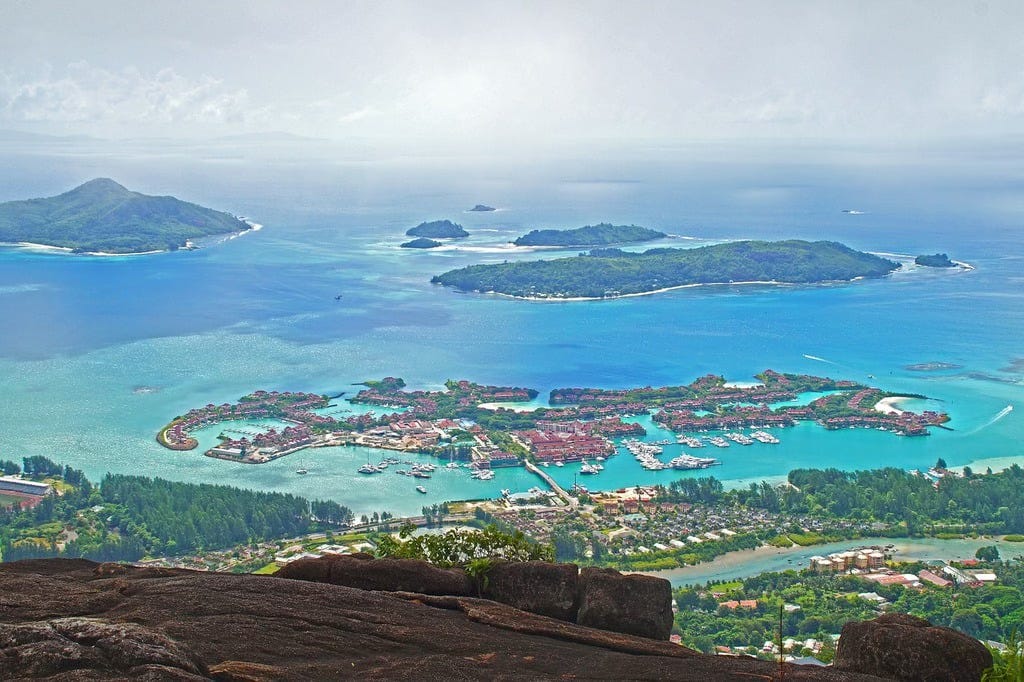
Something strange is happening here. And it tells us more about how power actually works in the twenty-first century than almost any case study of great power politics.
Christian Bueger and Anders Wivel set out to understand this anomaly in their 2018 study published in the Journal of the Indian Ocean Region. What they found challenges some deeply held assumptions about who gets to matter in international affairs.
The conventional wisdom is simple enough. In international relations, capability equals influence. States with big militaries, large populations, and substantial economies shape the rules. Everyone else adapts. As Neal Jesse and John Dreyer put it, “the great powers establish not only the norms and structures of the international system, but also the regional security hierarchies.” Small states are pawns. They find it hard to participate in processes that happen “above their heads,” as Carsten Holbraad observed.
Microstates face an even more acute version of this problem. They are, in the words of Kajsa Oest and Anders Wivel, “always the weak state in an asymmetric relationship when interacting with another state at the global, regional or sub-regional levels.” There is no situation where they hold the stronger hand. Denmark can be weaker than Russia but stronger than Estonia. The Seychelles is weaker than everyone.
But here is where the story gets interesting.
The Seychelles faces what Bueger and Wivel call a “quadruple predicament.” It is a microstate, so it is permanently disadvantaged in any negotiation. It is a developing country, which exacerbates those disadvantages through weaker networks and smaller talent pools. It is a small island nation with only 455 square kilometers of land spread across 155 islands, making it dependent on ocean resources it seemingly cannot protect. And it exists in a weakly institutionalized region with no Indian Ocean equivalent of NATO or the European Union to provide shelter.
By every measure that international relations scholars typically use, the Seychelles should be irrelevant. It should be seeking survival through the strategies that other microstates have adopted: becoming a tax haven, hosting foreign military bases, or simply keeping its head down and hoping the great powers ignore it.
Instead, the Seychelles chairs international negotiations.
The explanation begins with pirates.
In 2008, attacks by Somali pirates began spreading across the Western Indian Ocean. What had been a localized problem off the Horn of Africa expanded into Seychellois waters by 2009. The country’s economy, dependent on tourism and fishing, faced an existential threat. Pirates attempted to operate from the outer islands. Seychellois crew members were taken hostage.
This could have been purely catastrophic. For many countries, it was. But the Seychelles government saw something else: an opportunity.
The international community responded to the piracy crisis by deploying substantial naval forces. The United States, NATO, the European Union, India, Pakistan, Russia, China, Singapore, South Korea, and Japan all sent ships. These navies needed a place for maintenance and crew recreation. The port of Victoria on the main island of Mahe became, once again, a major port of call. The country’s airstrip began hosting reconnaissance aircraft monitoring regional waters.
The Seychelles could have simply accepted this traffic and collected whatever economic benefits came from it. Instead, the government did something clever. It volunteered to prosecute captured pirates.
This solved a serious problem for the international navies. Catching pirates was one thing, but bringing them home for prosecution created operational constraints and legal complications that most countries wanted to avoid. The result was what observers called the “catch and release” problem: pirates were intercepted, stopped, and then released because there was nowhere to put them.
The Seychelles offered a solution. It signed transfer agreements with multiple countries and became the primary prosecuting state in the region. By 2015, the country had received and prosecuted 142 pirates, as documented by researcher J. Larsen.
To make this possible, the Seychelles received substantial capacity building support. The UN Office on Drugs and Crime and the European Union’s EUCAP Nestor mission provided training, mentors, and equipment. The main prison on Mahe was fully refurbished. A dedicated courtroom for piracy prosecutions was built. Forensic equipment and computers were provided to judges, police, and coast guard.
But the government did not stop there. In 2010, it drafted “The Seychelles Comprehensive Maritime Security Plan of Action Rolling Plan (2010-2040).” This document laid out in precise detail what capacities and equipment the country needed to fight piracy, with special attention to the coast guard, air force, and maritime domain awareness. It was, in essence, a shopping list presented to the international community.
The shopping list was filled.
India donated an offshore patrol vessel, two maritime reconnaissance aircraft, and a 5 million dollar defense grant. The UAE donated a new coast guard facility worth 15 million dollars and two coast guard vessels. The United States provided a coastal surveillance system with situational awareness functionality, target detection, and classification capabilities. The United Kingdom funded an intelligence sharing center. Denmark donated three patrol boats.
By 2015, the Seychelles had the most advanced coast guard and maritime police in Eastern Africa. A country that ranked 109th among the world’s military powers had built genuine capabilities in a specific domain by positioning itself as a problem solver rather than a supplicant.
The piracy crisis also opened doors for strategic positioning. When navies were looking for permanent bases in the region, the Seychelles made itself available. In 2011, the government invited China to consider establishing a military presence on Mahe. In 2012, reports emerged that Russia was considering opening a naval facility. Neither materialized, partly because piracy was increasingly contained by then. But negotiations with India led to an agreement in March 2015 to build military infrastructure on the remote island of Assumption. Construction began in 2017, and the project has only grown in importance as Chinese-Indian naval rivalry intensified following China’s announcement of a base in Djibouti.
The country had converted vulnerability into leverage.
When the Contact Group on Piracy off the Coast of Somalia needed a chair from the region in 2014, the Seychelles volunteered. It was the first time a regional country had taken that responsibility. Previous chairs had been major international maritime actors and industrial nations: the United States, Japan, Norway, Singapore. The candidacy was endorsed by consensus.
This was not charity. The international community trusted the Seychelles because it had proven itself a reliable partner with genuine expertise. During its two years of chairmanship, the country successfully negotiated the reform of the group and coordinated the response to a spike in piracy incidents in early 2017.
But maritime security was only half the story.
The same strategic approach that worked for piracy also worked for environmental governance. The Seychelles has a long history in ocean diplomacy. In 1979, just three years after independence, the country proposed turning the entire Indian Ocean into a whale sanctuary. The proposal failed due to great power resistance, but as researcher Sidney Holt documented, it became known among environmental policy experts as “the Seychelles proposal” and established the country’s reputation in ocean governance.
In 2011, the Ministry of Foreign Affairs began building a campaign around a concept that was just entering the international vocabulary: the blue economy. This term, referring to the sustainable development and environmental protection of ocean resources, had emerged during the Rio+20 conference. The Seychelles decided to own it.
The government gave presentations at the African Union Summit, the Tokyo International Conference on African Development, the Indian Ocean Rim Association Economic and Business Conference, and events in Abu Dhabi and London. The University of Seychelles launched a Blue Economy Research Institute. The government formed a Ministry of Finance, Trade and the Blue Economy. The Foreign Affairs Ministry published a book titled “The Blue Economy: Seychelles’ Vision for a Blue Horizon.” The president himself wrote an extended book called “Rethinking the Oceans: Towards the Blue Economy.”
As then-President James Michel explained the strategy:
“We have taken every opportunity to meet and to make representations to larger countries and international bodies. Just as the Green Economy was previously introduced to the world agenda, we have set ourselves the parallel task of bringing forward the Blue Economy. We are being remarkably successful in doing so. As a result of our advocacy of the Blue Economy, Seychelles is being invited, more and more, to share our thoughts at international conferences and political meetings.”
The campaign worked. The blue economy concept was incorporated into the African Union’s African Integrated Maritime Strategy 2050. By 2015, international reports from the Economist Intelligence Unit, the UN Economic Commission for Africa, the UN Environmental Program, and the World Wildlife Foundation all affirmed the policy importance of the concept and referenced the Seychelles as a leading advocate and innovator.
Now here is the part that the academic literature struggles to explain fully. Material factors matter, certainly. Location matters. Strategy matters. But there is something else operating in the Seychelles’ success, something that Bueger and Wivel call “Creole diplomacy.”
The Seychelles is a Creole country in a specific sense. When the French arrived, the islands had no inhabitants. They brought slave workers from Eastern Africa, traded as individuals rather than groups, which prevented them from preserving their cultures of origin. After slavery ended, workers from across Asia moved to the islands. Unlike Mauritius, where this led to distinct Indian ethnic communities, the Seychelles’ small size forced integration. French and British, African and Arab, Indian and other cultures fused into something new.
Former President James Mancham captured this in a poem that the historian Deryck Scarr quotes: “This unique blend of races / Ambassador of all cultures / Mirror resplendent of all colours / The melting pot of ethnical prejudices / The fusion-spot of every civilization / You are a sample of the world to come.”
What does this have to do with diplomacy? Quite a lot, it turns out.
Creole culture embodies two principles that transfer remarkably well to multilateral negotiations. The first is genuine openness to difference. Cultural heterogeneity is not a problem to be managed but a source of creative combination. The second is thoroughgoing pragmatism. Rather than starting from foundational principles and beliefs, Creole thinking starts from what works.
These principles make the Seychelles particularly suited to policy domains like maritime security and blue economy, which are complex and heterogeneous and demand thinking outside established boxes. They also make Seychellois diplomats effective in multilateral settings where consensus requires both appreciation of different perspectives and practical compromise.
The small size of the government, usually considered a weakness, becomes a strength in this context. With ministries in close proximity and staff moving regularly between them, coordination happens easily. Administrative stovepipes and bureaucratic culture are avoided. Information flows quickly between departments. For cross-cutting issues like sustainable development or maritime security, this enables the “whole of government” approach that larger states struggle to achieve.
The strategic implications are clear. Instead of entering formal security alliances, the Seychelles aims to maximize partnerships with everyone. As then-Foreign Minister Jean-Paul Adam put it in a 2014 speech: “The Seychelles government, since the time of the Cold War, has adopted the principle that all partners willing to cooperate with Seychelles on an equal basis in terms of maritime security is welcome to do so.”
This is a hedging strategy. The country strengthens ties with multiple states rather than allying with any single one. It has received strategic support from all major powers in the region without becoming reliant on any of them. Its openness and principle of not favoring one partner above another allows it to leverage support for wide-ranging initiatives despite its small size.
There are limits to this approach, of course. Administrative capacity sets one boundary. With a diplomatic staff of only one hundred people, there is simply a limit to how many negotiations you can participate in, let alone influence. Expertise is concentrated in a few individuals, preventing sub-specialization and requiring reliance on external consultants in many fields. If the country pursues overt interest-driven policies rather than playing the broker role, its position can easily be ignored. And the success of Seychellois diplomacy depends on working within existing great power discourses rather than challenging them directly.
The whale sanctuary proposal failed because it challenged great power interests. The anti-piracy and blue economy agendas succeeded because they contributed solutions to problems that major powers already recognized. The difference is instructive.
What does this mean for other small states? Several things, according to Bueger and Wivel.
Creole foreign policy enables going beyond traditional divisions, emphasizing holistic thinking and pragmatic problem solving. This is increasingly valuable in a world where the most important issues cut across established boundaries and bureaucratic categories. By being able to offer problem solutions and expertise in focal areas, small states can garner significant support, expand networking opportunities, and achieve a unique status that formal measures of power would never predict. By acting as innovators and experimenting with new approaches, they can maximize reputation and influence debates that might otherwise exclude them entirely.
None of this means that power does not matter or that any microstate can simply will itself into diplomatic relevance. The Seychelles had real assets to work with: a strategic location, a Creole culture suited to bridging differences, and a government capable of coordinating across departments. It also benefited from circumstances, particularly the piracy crisis, that created demand for exactly what it could supply.
But the case challenges the easy assumption that capability and influence map neatly onto each other. It suggests that in an increasingly institutionalized world, where problems require coordination among many actors and solutions emerge from deliberation rather than dictation, there may be more space for smart small states than classical theories of international relations would predict.
The Seychelles did not become powerful in any conventional sense. It remains a microstate with no ability to project force or coerce larger neighbors. What it became was useful, credible, and positioned at the intersection of conversations that mattered.
In international relations, that turns out to be worth quite a lot.
Sources
Bueger, Christian, and Anders Wivel. “How do small island states maximize influence? Creole diplomacy and the smart state foreign policy of the Seychelles.” Journal of the Indian Ocean Region (2018). https://doi.org/10.1080/19480881.2018.1471122
Adam, Jean-Paul. “The role of small states in building a global community.” Remarks at the Institute for Cultural Diplomacy, Berlin, December 20, 2014.
Holt, Sidney. “Opportunity: Needs meet possibilities. Negotiating sanctuaries for whales.” Paper presented at the First International Conference on Marine Mammal Protected Areas, Maui, Hawaii, March-April 2009.
Jesse, Neal G., and John R. Dreyer. Small States in the International System at Peace and War. Lanham: Lexington Books, 2016.
Larsen, J. “Towards maritime security in the Indian Ocean: The case of Seychelles.” Island Studies Journal 4 (2015): 50-59.
Michel, James A. Rethinking the Oceans: Towards the Blue Economy. St. Paul: Paragon House, 2016.
Oest, Kajsa J. N., and Anders Wivel. “Security, profit or shadow of the past? Explaining the security strategies of microstates.” Cambridge Review of International Affairs 23, no. 3 (2010): 429-453.
Scarr, Deryck. Seychelles Since 1770: History of Slave and Post-Slavery Society. Trenton, NJ: Africa World Press, 1999.